Cannabis Stem Cells The Real Health Revolution Youre Missing
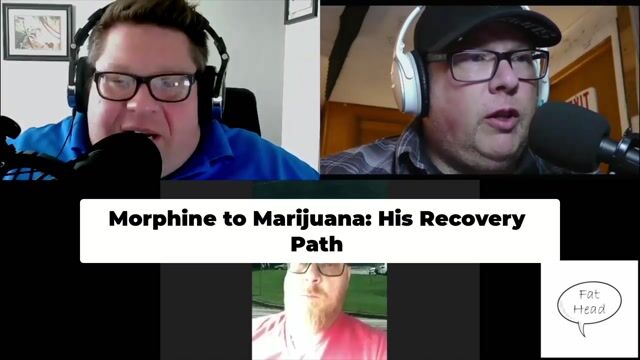
recovery"I wish I would have done cannabis first. Things would have been totally different for me." Boone went through 17 days in a lockdown unit coming off VA drugs, tried everything medical science had to offer, then finally tried cannabis. Also covers stem cell therapy in Panama — 1.2 million births on this planet every week and we throw the umbilical cords in the trash. "The FDA's not working for us. They're working for the people that sell drugs."
Share & Download
Transcript
It's really, really helping a lot for him,
much better than that crap that just kind of spoon-fed,
you know?
You know, I'll tell you what,
I was on 90 milligrams of morphine, 30,
or 90 milligrams of morphine, 70, excuse me,
70 milligrams of Oxycontin every day,
you know, for that stuff.
And it was just-
And you're still hearing it.
Oh man, it was bad.
It was just all kinds of bad.
Yeah.
I'm still here and luckily, you know,
the stem cells I had, I think, helped my kidneys.
But yeah, I mean, you just can't,
you can't do that forever and expect it,
expect yourself to be okay.
Right.
Totally.
Hang on one, hang on one second, guys.
You're probably gonna have to edit something.
Hang on one second.
Oh, no worries.
Yeah.
Look at that beautiful background there.
Perfect.
Andrew Clyde.
Got an AR-15, yep.
The AR-15, which is so funny to me
that everyone's like,
stands for assault rifle.
It's a machine gun.
It's a machine gun, yeah.
It's like, what?
Yeah, they're kind of ridiculous about it.
I'll show you a machine gun.
Tell me about it.
Oh, that's funny.
Yeah, so I mean, we've got other options out there.
It was, you know, for me,
I did 17 days in a lockdown unit coming off the drugs.
When I got off the drugs, then it was like,
okay, what am I gonna do?
Some young person said, you know,
why don't you smoke weed?
And I was like, I'm not that kind of guy.
I don't smoke weed, you know?
But then after, you know, a little bit of, you know,
really just kind of being smart about things to myself,
like, you know, I've tried everything
medical science has to offer.
I've tried every single thing.
I've done every modality.
I've done every drug.
I've done everything they've asked me to do for years.
I haven't tried cannabis.
Okay, well, if I haven't tried it,
I mean, I've done everything else.
Let's try that.
And I'll tell you what I came away with.
I wish I would have done cannabis first.
These things would have been different for me,
totally different for me.
Yo, I'm sure, I'm sure.
It's, and I actually want to talk a little bit more
about this, because it's interesting for me, you know,
you know, I belong to the Church of Jesus Christ
of Latter-day Saints, which is like no drugs, no alcohol,
no coffee and all that.
But, you know, the church standpoint is that
if medical marijuana, if there is legitimacy to it,
and I believe there is absolutely that it should be used,
but I think big pharma, things like that.
I mean, what are your thoughts on that?
Like, as far as why, is it the stigma of the sixties
that's still attached to it?
Is it, you know, big pharma that's saying,
hey, look, how can, you know, there's not much money in it.
As much money.
Reefer Madness.
Reefer Madness, yeah.
Yeah, I mean, there's just been a lot of bad training,
right?
I mean, and good people are still trying to do good things.
And there was a good, bad, you know, dichotomy
that was thrown on cannabis.
Like, this is bad.
People who do this are bad.
Right.
But comparing it to heroin and cocaine
and LSD and all these other things,
and cannabis is not that at all.
Cannabis is pretty much coffee in reverse.
It's, yeah.
It has the same addiction rate as coffee.
You know, it makes you relax.
You can't OD on it.
You can't, it can't stop your breathing.
It can't stop your heart.
Right.
You know, it's not cocaine.
You know, it's not, it just doesn't have
those same problems, but yet it's been packaged that way.
And God bless our Christians in our country,
doing a lot of great things,
but really the religious right has just been misled.
And then they've turned into disciples
for the anti-cannabis, for the prohibition of cannabis.
And it's not served us well.
It truly has not served us well.
They've been tricked, they've been lied to.
We all have been tricked, have been lied to.
And we need to get past that.
We just need to come to terms
with our own cognitive dissonance and say, you know what?
Maybe I should listen to the people
who do this responsibly and take a, you know,
take a page from their notebook.
And that's what I do.
I'm just giving a page from my notebook.
Hey, this is what I've been through.
This is what I do.
This works.
And I'll tell you what, in 2010,
you couldn't get anybody to respond to you
when it came to the cannabis.
You know, I'm kind of like the Snoop Dogg
of the war fighter community.
So everybody talks to me about it.
It's true.
I mean, and it's amazing.
It doesn't matter where I go.
It doesn't matter if I'm doing speeches
in front of law enforcement.
It doesn't matter if I'm doing speeches
in front of church groups.
It doesn't matter.
The financial organizations,
bottom line is, I'll tell my story about cannabis.
And I've always got someone who pulls me aside and goes,
hey, I can't tell anybody, but I do it too.
Keep doing what you're doing.
Like, it's ridiculous the amount of people
who literally are scared to death
to tell the truth about something
that is completely nontoxic to humans.
We're talking about safer than grapes, literally.
Oh yeah.
Well, and- Safer than grapes, wow.
And what an alternative to alcohol, for example.
You know, you have a lot of vets that come home
and turn to alcohol as well.
You know, and yeah, I mean, marijuana, like you said,
you can't OD on it.
It's not addictive like alcohol or any, you know,
and that's legal.
No, it has the addiction rate of coffee.
When you tell me marijuana should be illegal,
well, then you know what?
People need to start lining up
and making coffee illegal too,
because we're talking about this,
we're talking about something that affects the human body
to the same degree in a different way,
but to the same degree.
It's the same receptors, if I'm right.
It's the same receptors in the brain
that react to the cannabis the same as coffee, correct?
I don't know the answer to that question.
I couldn't tell you, honestly.
All right, I think it is.
I think that's what I was reading about it.
Interesting, interesting.
And stem cells, you know, I mean,
I had to go to Panama to get stem cell therapy
for my heart, which was secondary
to a service-connected condition anyway,
which would have killed me.
I mean, I would have been dead last April
if I hadn't done anything.
And now, you know, my heart's better,
I'm doing great things,
and I'm looking forward to getting the message out.
You know, I had a lot of gigs scheduled this year
to go on the road and start talking about stem cells.
Unfortunately, the COVID hoax got in the way,
and I wasn't able to do that
because things got canceled.
But you know, stem cells,
I had to go down to Panama
to get stem cell therapy for my heart.
There's no reason why we shouldn't be doing that
in the United States.
I was gonna ask you that.
Why can't we do that in the United States?
We're not talking about, you know,
killing premature babies.
We're talking about taking stem cells
from an umbilical cord that's already been used.
It's gonna go in the trash.
Nobody's gonna do anything with it.
Why not use that one stem,
that one umbilical cord to harvest the stem cells
and treat people for conditions,
whether it's heart conditions,
whether it's age-related illnesses,
you know, deficiencies.
I mean, there's so many things we could do
with that umbilical cord.
And there's 1.2 million births on this planet every week.
And you know what we do with the umbilical cord?
We throw it in the freaking trash.
Yeah.
And to me, I think that's a travesty.
I think it needs to stop.
We gotta get the word out there.
And we gotta get the FDA under control
because, you know, they're not working for us.
They're working for the people that sell drugs.
Yeah, they're working for the pharmaceutical companies.
Yep.
Exactly.
And with stem cell therapy, guess what?
You don't need the drugs.
You can actually be cured.
Well, why don't they just transition into,
I mean, yeah.
What were you gonna say, Monte, sorry.
Yeah, when my youngest was born,
I know we donated the umbilical cord and placenta.
I can't remember what it was to,
it was towards a study of some kind,
but they asked us if we would donate it.
And we said, yes, absolutely.
So that was 16 years ago.
So they've been studying that for at least,
I'm not sure exactly what the purpose at that time was,
but they've been studying the use of that
for at least 16 years.
Are they just keeping it a secret?
Is that what it is?
They know.
I mean, even if you wanted to talk anecdotally,
there's so much information on stem cell therapy.
If you check out stem cells on the NIH,
they've got a ton of data,
but none of it's from the United States.
It's from other countries.
And that's a problem.
Why isn't the United States trying to figure this out
as much as other people?
And I think the answer is obvious.
It's about monetization.
It's about making investors happy.
It's about making stock prices stay up
and people earn their money from that.
But I thought that it was supposed to be
about people's health, not about other people's profit.
And that's where we need to get squared away in this country.
We need to understand that if we don't start
taking care of our people,
people are not going to be able to make a profit
because our people are gonna be too sick.
I mean, just look around you.
The environmental toxicity just by living
in the world today makes people sick.
If I had my way, I'll tell you what I'd do
if I had my way.
If I had my way, I'd do something very un-Republican.
I would go to these businesses who are gross polluters,
who put stuff in the air, who put stuff in the water.
And I'd say, guess what?
You got a small tax.
I'd also tax the people
because we like to drive cars,
but it puts lead in the air.
We know this, it puts lead in the air,
but we like to drive our cars.
So we should be responsible too.
I put a small tax on everybody.
And then here's what I do.
Continue the Journey
This video is part of a guided experience. Watch the full story in order.
Start the Recovery Journey →