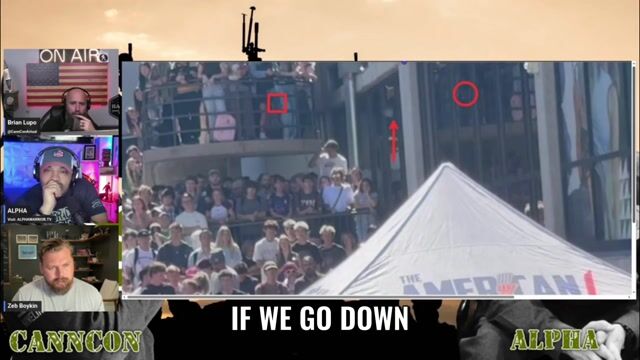
Analyzing Viral Footage Cracking The Camera Angle Shutter Sp
preparednessFrame-by-frame video analysis of a shooting incident — exit trajectories, shutter speed versus frame rate on iPhones, aperture behavior in bright conditions. Boone applies the same precision from the field to citizen-level forensic work, reading what cameras actually captured versus what the eye thinks it saw.
Share & Download
Transcript
And if we go down, there's another three photos, which are what I believe both two, two of them are from that same exact camera angle. Whoever filmed that angle, that, that camera is a Patriot possibly if I'm right. And then, all right, so this is a one on exit. I know it doesn't show it's hitting yet, but this is, this is on exit. The next one is the same frame. You go to next image. Yep, standby. No, you're good. And so if we go to next image, this is basically same camera, next frame, and it's appearing. And then if you go next one, this is the other camera. Same exact frame as the other bullets. So, okay, so I saw... I initially thought this was pre-hit, but it's not. It's not Because it matches up with the other bullets frames. And it's one frame prior to Charlie Kirk appearing to be hit. It takes time to move mass. We're looking at 30th of a second here. The expansion is going to take time. The exit to show is going to take a slight break. I mean, give me, I think you can give me like a frame and a half, two frames. I feel like, I feel like that's a little bit of leeway if we're talking about 30ths of a second here. And then, and then we can, yeah, I mean, that that's about it outside of that. It's just a little bit of, you know, run it from there and see where we're at. So this, I I'm assuming that, you know, being a cell phone, this is probably what 30 to 60 frames per second. Yeah. So when you when we're talking about videography or imaging, we have frames per second, which is how fast it takes the photo or how fast it takes the frame. And then we have shutter speed or exposure time. And so the difference is it's not taking a 30th of a second to take that picture. It's on, that's the only, that's a separation between it taking the picture, if that makes sense. And so if your shutter speed or exposure time, and so if we take a phone into dark and iPhone and you try to take a picture, you're going to have to hold it there for three seconds or so for it to capture, it'll open up, it'll open up, capture all the light it can and then process an image. And so that's, We're seeing the exact opposite of that, right? It's 220 in Utah with no clouds. And so everything's even washed out. I mean, look at the blue. It's got a white wash over it because the iPhone is maxed out aperture. It's collecting as little or minimize as much aperture. It's collecting as little as it can, as fast as it can, and then processing that.
Continue the Journey
This video is part of a guided experience. Watch the full story in order.
Start the Preparedness Journey →