Control Your Mind Fight Anxiety Social Media Chaos
preparedness"Protect your mind, control your emotions. You can't protect your mind unless you control your emotions." Boone talks people off the ledge — is there food in your fridge? Gas in your car? Mortgage paid? Then take it down a notch. You're along for the ride, so stop acting like you're driving the car. Make sure your passengers are okay and control what you can control, because a lot of people are becoming emotionally invested in things they don't control.
Share & Download
Transcript
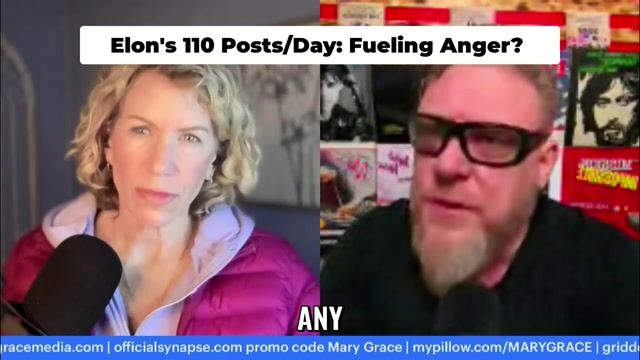
Any, I mean, Elon's putting out something like 110 posts a day,
you know, and, and it's very targeted.
He's amplifying certain voices, you know, he's, he's doing what, what a
man in his position would be doing.
So, so that's happening.
You're getting a lot of information and, and we really can't sort it out other
than, you know, it kind of boils down into one theme, which is you should be
pissed off, you know, and, and I think that's, that's for a reason because that
pain right there makes people willing to, to go through the adversity.
It's like, everybody feels like they're in a corner right now and they've got
to fight their way out of it.
And, and that's for a reason, you know, that's, that's for a reason.
And so that's where we're at.
We are in a corner.
We are going to have to fight our way out of this corner in order to want to fight.
You got to throw punches and in order to win a fight, you know, sometimes you
got to take some punches and that's going to happen.
I think the way people get through it is the back to that adage.
I say all the time, protect your mind, control your emotions.
You can't protect your mind unless you control your emotions.
And though it may feel like, um, it may feel like a dire situation at the end of
the day, is there food in your fridge?
Is there gas in your car?
Is your rent?
Is your mortgage paid?
Is everybody healthy?
If that's the case, then okay.
Cool.
Cool.
You know, then, then take it down a notch, take it down a notch, because at the end
of the day, you're along for the ride.
So don't act like you're driving the car.
Cause you're not, you're just along for the ride.
So while you're going along for the ride, you know, you make sure that your passengers
are okay, you make sure you got gas in the car, you make sure that, you know, the
windshield, the windshield wipers are new in case you run into some climate weather,
control what you can control.
Okay.
This, this is a big deal, you know, cause a lot of people are becoming emotionally
invested in things that they really do not control.
And it comes at a cost.
It comes at a cost of not controlling the things that you can control.
So control what you can control, control the controllables.
Everything else is just a soap opera.
You don't have time for, so control the controllables.
Everything else is just a soap opera.
You don't have time for be aware of it.
I know that it's going on, but realize that you're along for the ride.
You're not steering the ship anywhere right now.
So be supportive, be ready, make sure you're taking care of your family.
Don't ignore your kids because you're so stressed out and, you know, because
some, something somebody did and where your money went to not going to help
your kids, so make sure you're being a good parent, make sure you're being a
good spouse, you're being a good partner to the people that you love and, and
really focus on that and focus on your breathing.
Oh, I was taught a long time ago.
When things get rough, what you focus on is your breathing.
You know, if you can't, if you're not in an environment, you have to manage right
away, you're just dealing with the anxiety, but what you focus on is your breathing.
Once you get your breathing under control, your mind starts to open up a little bit.
And then you identify, okay, what can I, what is manageable here?
What needs to be mitigated here?
What can be controlled here?
And then once you kind of break things into those steps, things get a lot better
because nobody, I mean, nobody, we talk about this, I mean, talk about war.
We talk about combat, right?
We talk about color codes of awareness and managing your stress.
You know, if you can't stay up all the time and expect to go on a patrol and be
efficiently do what you need to do on a patrol, so you got to have downtime.
You got to have social time.
You've got to have, you got to have time to rest.
You guys have time to recuperate.
You got a time to get, to get your body healthy.
You got to get some nourishment.
You have to turn it off because you can't stay on all the time.
So if you are looking at this situation where at some point in time, you may have
to be operational, you know, quote unquote, in your own way.
Well, if that's the case, you know, it's, it's, it's, it's real simple.
If you're not fighting your training, if you're not training, you're eating,
if you're not eating, you're sleeping.
Okay.
That's it.
It's not every situation is a situation where you're fighting.
Not every is training, not every is eating, not every, every is sleeping.
So pick where you're at, you know, if it's time to eat, you eat.
If it's time to sleep, you sleep.
It's time to train, you fight, you fight, but you can't, you got to really draw some,
some good draw on your discipline in that type, in that type of situation.
And it doesn't matter if it's a combat situation.
Doesn't matter if it's raising kids.
It doesn't matter if it's dealing with social media.
What most people are dealing with right now is not the changes that are
happening in the government.
Most people are dealing with the information they see on social media.
That's, that's what you're really dealing with.
Think about it.
You don't have any effect on what's happening between Doge and USAID or the IC or
where, whatever else they're working on the treasury, the judges.
Yes, you can put, you can use your public support to, to help amplify a voice, to
amplify a situation that you think needs to be affected, but if you're not doing
that, then you're really just dealing with social media.
Right, right.
That, that makes a lot of sense.
It's, you know, and one thing that I, I mentioned earlier is that I, you know, I
called a friend and kind of bent it and, and I think this is, this is a key as
well, because I, you know, I see, I see people who are upset, which, which is
not, it's not, it's not a bad thing to be aware and to be expressing what you,
what you see, like, I mean, and I also, what I mean by that is that, you know,
for a very long time, people were afraid to say anything about anything because,
because of the censorship and because of the cancel culture.
And so I've noticed that people do have a more freedom to express what they
think, and I think that's a healthy thing.
However, I also think that there is, there's a fine line there where you're
expression could actually maybe get you in trouble.
And what I mean by that is, for example, last week, when I was just, I was
really having a hard time.
I mean, I was, I, all of it was just the reality of it was hitting so hard.
And I could have taken to social media and, and just gone off, right.
And, and people do that.
I see, I see these videos, but I, instead I called a friend.
I just, you know, and I just kind of said, can I, can I vent, can I just vent
unabashedly, unashamedly for like five minutes?
Like there's going to be cuss words, right?
That this is not going to be pretty, but I need to do this.
Like I've got to let the steam out so that I don't say something publicly that
I'm going to regret that I don't, because you know, sometimes, especially if
something goes viral, that is the one impression that people have of you ever.
And, you know, I've been doing this long enough to know that that's not what I
wanted, but, you know, we're all human and we're all going through these emotions
and they're very real.
And so, you know, that was, that was a good thing.
And then we kind of got through that and, and I didn't, I didn't end up going
viral for saying things that, you know, are kind of like people are like, that's
kind of out of character for her, you know?
So that was my strategy.
Can you think of some other ways that people can do that, that they can kind of
get through those moments?
Because I think it's important that we, that we acknowledge it, that we,
that we not bury it, but how can we get through that in an age of, you
know, publicizing everything?
Continue the Journey
This video is part of a guided experience. Watch the full story in order.
Start the Preparedness Journey →