Phone Addiction Its Worse Than You Think Break Free
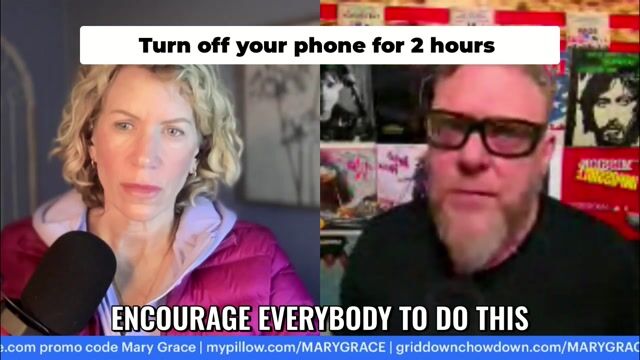
preparedness"Turn your phone off for two hours during waking hours. Leave it in the other room. If after seven minutes you start making excuses for why you need it — that sounds a lot like addiction behavior." Boone's standing challenge. The phone is the access point. Remove the access point and the susceptibility doesn't matter.
Share & Download
Transcript
encourage everybody to do this. During waking hours, turn your
phone off for two hours and leave it in the other room. And
if after about seven minutes, you start making excuses for why
you need to be on the phone. Well, that sounds a lot like
addiction. Right? I remember when I was heavily addicted to
opiates, I get to the VA, I'd be calling the VA two days in
advance. Hey, you're gonna have it ready when I get there. Yeah,
we got it. It's in the system. It's in the system. Okay, good.
It's in the system. And then what time's the pharmacy? It's
nine o'clock. Okay, I'm down there at 850 pulling my little,
my little number so I can get it. They would give me that they
would give me that Vicodin or oxycodone or morphine or
whatever was was the flavor of the month. And I would grab that
bottle because I would run out. Literally, at the time I needed
a refill, there was no waiting, you know, and some a lot of
times, the worse it got, I would be running out a day before. So
now I'm geeking, right. And I would get that bottle and it's
got that red security tape across the across the lid. And
I would challenge myself once I got it from the pharmacist to
get to the front door or to get to my car to get home without
taking a dose. I never once made it. I never once made it. Well,
if you are dealing with your phone in the same way, if you
can't just put it away and not go to it. Well, that sounds a
lot like addiction. And if you've done with addiction, you
know what it looks like in all forms. So I encourage people to
acknowledge to themselves that yes, you have an addiction. And
you need to set some boundaries. Otherwise, things start going
awry. That's just the way it is.
Yeah, that Yeah, yeah. Wow. It's this is very helpful. And you
know, it's, it's, it's, it's simple, right? It's, it's
simple. Sometimes it's not easy. But what you're saying is very
simple. Just put the phone away, practice the tech
discipline, and also, you know, discipline your mind, protect
your mind, somebody mentioned in the chat, that their blood
pressure is up that they're not sleeping, right, because of the
things that we see happening with our government. And I
would, I would reiterate to everybody what Boone said, which
is that it is there, there are many, many things that are
outside of our control. And so as we go through this, focus on
what you can control. And it's, it ends up being a very, very
small sphere of things, right? It's just like, I can control
when I get up in the morning, I can control what I do from the
minute I get up, whether it's, you know, making the bed, fixing
food, like, really pretty basic things. And, you know, keeping
my house in order, keeping my bills paid, those types of
things, returning calls, you know, mailing a letter,
whatever it is that's on your list of things you can control.
And, you know, for me, going to the gym, making that decision,
making that commitment to get there, even if it means I just
take a walk while I'm there, you know, walk a mile, walk two
miles, just because I know that's where I'm unplugged,
right? And so it has to be your thing that you choose, and you
take personal responsibility for it. And another thing I would
say too, is like, give yourself grace, but don't rely on
excuses all of the time, there's a fine line between saying, I
made a mistake, and then just repeating the same thing over
and over every day. And expecting the different results,
right?
People are going to have to practice getting off their tech.
That's why I just say start with two hours. I mean, really two
hours, you don't have a bathroom that needs to be cleaned. You
know, you don't have a garage needs to be reorganized. You
know, you don't have, you know, to look at to be able to, you
know, spend some time with your kid and go throw the ball around
from it. Nobody has that. So they have nothing to do with be
online. No, you have that stuff. It's being neglected. Because
you're giving yourself an excuse with the you're
procrastinating. And you're saying it's okay, because you're
being productive. You're checking on things. What are you
checking on? Is Trump going to call you in 10 minutes and ask
you for your opinion based upon an executive order you just
wrote? No, you're you're just there to turn yourself up. Turn
it off. Turn it off because you're making yourself
susceptible to you're making yourself susceptible to really
bad things. And yeah, it's, it's just not necessary. And it's
crazy. I talked to this people. And if we took out the term
social media, and we put in the word alcohol, everybody would go,
Oh, yeah, that's what you have to do. You got to set limits and
boundaries. And you can't be drinking all day long. And that
doesn't, it would be ridiculous. Everybody would understand it.
But when you turn that mirror around, you say, Okay, now let's
pull that word alcohol and put the word social media in the
middle. What now? Can you look at yourself? Can you look at
yourself and realize that maybe there's a problem here? And a
little better?
Well, yeah, yeah. And it's interesting, because, you know,
you see these you see, you see people sometimes out with their
kids, and they're sitting in a park or whatever, and the kids
are playing, and they're on their phones, right? And, and
yet, they'll, they'll say, you know, my kids don't get screen
time or whatever. But one thing I've learned about kids is that
they, they don't, they don't do what you say, they do what you
do. And so if you are a parent or a grandparent, you're setting
an example for them, like, this is what this is my priority.
This is what I'm spending my time on. So it's, I mean, you're, I
love having you on the show, because you challenge, you
challenge me, you challenge, challenge us. And, and I know
it's not easy, because you personally have overcome a lot of
these things in your own life. And, and so you're speaking from
experience to us. And that's something that is invaluable.
And I really appreciate it. I appreciate you taking the time
and also sharing with us the things that you've learned. It's,
you know, there's nothing nothing better than experience
for to help us to help us through this. So I appreciate it.
And we help each other. We you know, we help each other through
these experiences. And hopefully that's positive, then, then
everybody being isolated and siloed into their own mind
that's connected to a device. Yeah, it's literally controlling
your emotions all day long. I mean, who would willingly do
that? Who would willingly walk into a room of people and say,
I'm going to let you guys all control my emotions for the next
17 hours. Nobody would do that. But you volunteered to do it
every time you step on social media and you're there for 10
hours, 15 hours, what did you really get out of it other than
a bunch of, you know, mental stuff you probably didn't need.
Could you have learned the same information, the news events
that happened in that day in 20 minutes in an hour? Yeah, you
could have. You could have you could absolutely could have there
would be no change. The only thing that would be different is
you'd be more productive in.
Yeah. Yeah, that's, it's so true. One, one other question,
speaking of controlling your emotions, every every all of us
have associates, family members, friends, who are wigging out.
But for different reasons, right? They, you know, they're
being they're buying into the narrative that this is literally
the end of the country, that America is being overtaken by
Doge, by Elon Musk, that that there's an, you know, another
insurrection going on, whatever it is they think. What are some
practical things that people can do when they are encountering
those conversations or people who are in club? Well, here's a
perfect example. I had somebody tell me last week that a
business associate, actually a mentor, a business mentor that
they had been working with for over a year very closely, found
out who she voted for, and broke up broke broke off the
relationship with just unceremoniously with an email,
because of politics, right? And it was, it was very hurtful for
my friend, because they had worked in the trenches, in
business with this mentorship. And it was a very valuable
relationship. And because of the perception that this person has
about President Trump stance on one particular issue, that
really isn't even accurate. That person broke off just
completely cut off the relationship. And that's an
extreme example. But we see that we see these extremes. How?
Oh, we've seen a lot over the years. And this is where I
break into song and dance about frame of reference, right? We
different frame of reference. And I've seen these things get,
you know, turned in not so good ways. And we kind of really need
to step back and evaluate the people around us based on their
frame of reference, not our own. Like I oftentimes if I'm going
to, if I think I'm going to get into a heated argument with
somebody, I'll tell them, hey, before we go into this, let me
explain something. Before we start, I'm going to try and
understand what you're saying and understand your frame of
reference more than I tried to convince you of mine. That
immediately settles everything down. And I mean what I say.
Continue the Journey
This video is part of a guided experience. Watch the full story in order.
Start the Preparedness Journey →