Stop Focusing On Distant Problems Master The 30meter Target
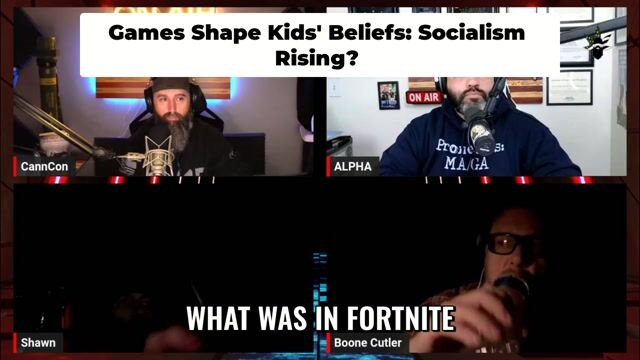
preparedness"What was in Fortnite? What's in the games they're seeing? We're starting to realize what they've been exposed to in school." Boone on the 30-meter target that's right in front of you — your kids' screens, their schools, the content shaping them. Stop worrying about what's 5,000 meters away when the thing that's going to hurt your family is in the next room.
Share & Download
Transcript
What was in Fortnite? What's in the games that they're seeing? We're starting to realize what they've been exposed to in school. And it can be very subtle. The characters in the games who undertake malicious acts or negative acts can be labeled in a way or depicted in a way that they develop natural, innate animosities in the kids exposed to them. This is why we now have something like 50% of the youngest generation that thinks socialism and communism are good and capitalism is bad. It's that kind of innate, very understated messaging that's embedded in media and other things they're being exposed to. We have to look at that. That's not a 30-meter target, but we have to look at it and work at it at the same time. The other thing I was going to say is most people don't know what a 30-meter meter target is or what it means. So we might have to work on that messaging. I like that point. So Boone, if you- Hold on, hold on, hold on, hold on, hold on, let Boone explain a little bit what, you know, the concept of a 30 meter, because I mean, we as military guys, we understand that, but a lay person, Colonel Smith is right, a lay person may not understand that to quite the same extent that we would. I mean, prioritize your efforts. Control what you do. Yeah. Work on what you can control. But in the military, what it means is a 30 minute target. Say you're on a range and they got pop up targets because these are the way military ranges run or some of them are run. And so they're variable targets that are pop up. One at 30, one at 50, one at 75, one at 100, one at 200, one at 250, one at 300, so on and so forth. And they'll pop up at different times. And you'll see in the military, and yeah, you're very right, sir. You're very right, sir. I should have explained the story because it really does kind of articulate things in a different way for some of our audience. When you're dealing with a young private who's just learning how to shoot their rifle, they're always worried about the 300-meter target because it's small. It's hard to hit. It takes time. And it takes skill. And so you'll see a lot of times they'll be scanning, and they'll be so worried that they're going to miss the 300-meter target. That there'll be 130 meters right in front of them. They'll pop up and go down and they never even saw it because they're so worried about that long target. And that's the thing, you know, don't be over focused on something that's so far away. And the other reason we want, again, the targets will pop up two at a time sometimes. And so you'll have a target pop up at 30 meters and a target pop up at 300 meters. Which one do you want to shoot first? How do you prioritize that? Well, the answer is you want to shoot the one that's closest to you because that's the one is more likely to hit you. They're closer to you. And so when you have two targets that pop up, you have a 30 meter and a 300 meter. You want to pop that 30 meter quick. And then you want to get up on your sights and hit that 300.
Continue the Journey
This video is part of a guided experience. Watch the full story in order.
Start the Preparedness Journey →