Unmasking 5th Gen Warfare Your Guide To Truth Action
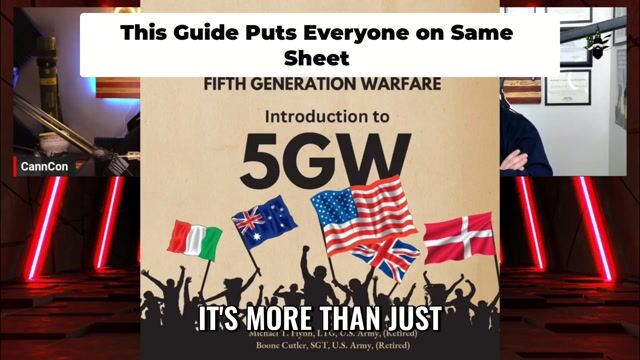
preparedness"It's more than just a book. We call it a guide for a reason. It looks like a guide." Boone on the intentional design of the Citizen's Guide — it's not a book you read once. It's a field manual you refer back to, take notes in, and use as a resource when you need to identify what's happening around you.
Share & Download
Transcript
And it's more than just a book. We call it a guide for a reason. It looks like a guide. It is, doesn't it? I mean, it looks like one of the FMs that you read in the military. And it's written very much the same way. And we don't even have page numbers. Everything you see with the heading is basically a lesson. And you get through all these lessons, then you have chapter questions and you answer the chapter questions so we can make sure that people are receiving the information and it's resonating and they can put it into practical use as soon as they get done with it. And it happens. I see people using this. They're actually referring to it. They're using the terminology. We're getting on the same sheet of music. And as you know, you can't conduct any... any effort, whether it be politically, whether it be socially, you can't get, you can't do any of that until you get on the same sheet of music and you start speaking the same language. This is the thing that gets everybody on the same sheet of music and speak in the same language so we can start planning and mobilizing. I want to real quick, Boone, I want to go back to the concepts of first through fourth generation warfare. And you have this kind of a progressive decentralization as you go through the steps, you know, starting with first gen with the phalanx and line and column and that kind of thing where you have a massive army that's under control, usually of just one head of the state, you know, in these individual states, you move into the second gen and third gen, and now you're starting to get mechanized, you're starting to break off into individual platoon size elements, company size elements, and kind of scatter a little bit. Then you get into fourth gen, and that's really where you start to see the famous term insurgency. You know, you're fighting against an unknown enemy at this point. Now, you know, once the fight is on, you know who the enemy is, but up until that point, you really don't know. And the scariest thing about fifth gen moving into it, and admittedly, I have not read the book yet. I just finished Colonel Scheller's, his book, and fifth gen is my next book, and we're gonna have you guys back on or sit rep show. I'll have it done by then. But I have studied fifth gen before I have, you know, read, read other things about fifth gen and so forth. And so as you get into this fifth gen warfare, now you have this problem where you don't know who your enemy is. And, you know, if you don't know who your enemy is, you don't know who your allies are either. And so you have this concept where, you know, a lot of people talk about betrayal and that kind of thing. And who, you know, who's on your side here? And that is probably one of the more difficult things for people to understand is who's good and who's bad here. But, you know, and especially lately, I can't remember his name. The guy that did Plandemic with Judy Mikovits, the guy that did the director for that, he just put out about a seven-minute video that somebody sent me the other day talking about this exact problem about infighting and stuff like that. So how is that something that we address in this movement, understanding the you know, whose side, who's on and the backstabbing that goes on in this.
Continue the Journey
This video is part of a guided experience. Watch the full story in order.
Start the Preparedness Journey →