Veteran Caregiver Program Financial Aid Health Benefits More
recovery"Everybody sit your ass in the seat." Boone on the VA caregiver program benefits — stipend, health insurance, mental health access. The financial side of warfighter family support that most people never hear about.
Share & Download
Transcript
Everybody, sit your ass in the seat.
When we come back, we're gonna talk about the benefits
of the caregiver program and what a stifement is.
We will be right back.
What's going on?
Did me right for let's go.
Betrayed me to kill, yeah they called me to go to jail.
This is Boone Cutler, author, war fighter,
and host of Tipping Point.
I wanna talk to you for a minute, just one minute,
and take the time to listen to what I'm saying.
The American Warfighter Day commits suicide
at a rate of 18 per day.
That's one every 80 minutes.
By the time you finish eating dinner this evening,
a war fighter will have committed suicide.
This is a tragedy.
We're losing the greatest of this generation
every day at an alarming rate.
Currently on active duty, a war fighter commits suicide
one every 36 hours.
But there are ways to help, and you should help.
You should help right now by contacting gallantview.org
and find out how you can contribute and help stop,
even eliminate, the war fighter suicide rate.
This is a tragedy and you can help right now
by contacting gallantview.org.
Do it now, make it happen, all the way.
I'm on the road to a cover, I'm on the road to a cover.
It's time for you to get your free Grunt Style T-shirt.
Here's how you do it, listen up, pay close attention.
Go to the gruntstyle.com webpage, pick out your design,
and then send me a message on Facebook
at Tipping Point with Boone Cutler.
First two people respond, get a free Grunt Style T-shirt.
Go to the gruntstyle.com right now, pick out your design,
and tell me what size you want, we'll ship it out to you.
That's gruntstyle.com and then send me a message
at Tipping Point with Boone Cutler on Facebook.
Make it happen.
One of the most significant things I've ever been through
since I've been back from the war
is going through a divorce.
As a combat veteran with post-traumatic stress disorder,
that was used against me.
If you're in the same situation,
I want you to consider using Sarah Hardy Cooper.
When the deck is stacked against you and you're a war fighter,
I think you should call Sarah Hardy Cooper.
And honestly, I don't think I could have won without her.
Of course, nothing is guaranteed,
but I don't think I could have won without her.
She's fantastic.
I want you to take down this number.
888-792-4363.
This is no joking matter.
You know that your future is in the balance.
And when the cards are stacked against you,
you need Sarah Hardy Cooper.
888-792-4363.
This is Andi O'Brien with the
Western States Hostage Negotiators Association.
You are being held hostage by my battle buddy,
Boone Cutler, on Tipping Points.
And we are back.
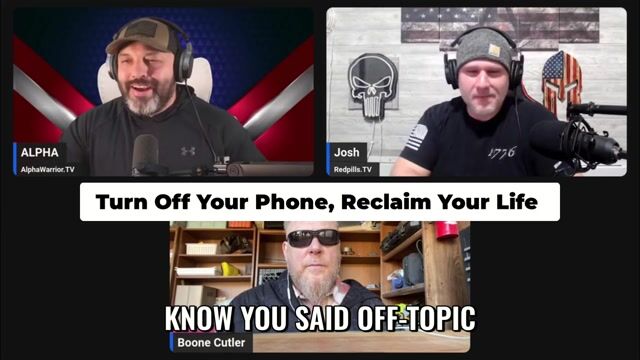
This is Tipping Point Boone Cutler.
We're on air right now with Byron Parks.
He is the caregiver support coordinator
with the Sierra Nevada Healthcare System.
Let me just summarize what that means.
He's the dude at the local VA
that has the caregiver program all set up.
He's your point of contact.
So if you're a veteran from the current war
or a spouse or a family member
interested in the caregiver program,
the guy you gotta talk to is Byron Parks.
Just walk through the door, look to the right,
ask anybody, hey, where is Byron Parks?
I gotta talk to that guy.
They'll direct you and Byron will help you out.
Am I wrong or am I right, Byron?
I will be glad to do that.
Outstanding.
Okay, we were gonna talk about benefits of the program,
but before we do, a very poignant
and very good point was brought up by Craig,
which is can anybody be a caregiver?
And here's how we address that.
Typically, a war fighter has in mind
who they want to be a caregiver
and why it's so important is because in our community,
it's very difficult to trust people.
So it'd be very rare that we would even accept assistance
or help from someone we didn't know
that was gonna be paid as a caregiver.
It's not, as you say, Byron, comprehensive.
So this is a good program.
The reason it's a good program
is because it puts the war fighter in charge.
There's no sense of helplessness.
There's no sense of being basically left out
of your decision making and I think it's a good thing.
Okay, now let's talk about the benefits
of the program, Byron.
What is it that assists?
Okay, here we have, we've got the caregiver
and we got the veteran, but it's more than that.
The caregiver gets certain benefits for being a caregiver.
What are those benefits?
Okay, now let me clarify.
These are post-9-11 veterans, service-connected.
That's a requirement that there has to be
a service-connected injury that necessitates
their needing a caregiver in the home.
So they meet those criteria.
They complete the training.
They then will be eligible for either,
well, one of three tiers,
depending on the extent of their disability
as determined by their physician at the VA.
So the physician reviews the disabilities
and the needs of the veteran.
They then meet a level of disability need and-
Need for assistance, a tier one, tier two,
tier three need for assistance.
Right. Okay.
And once they are qualified, they go through the training
and they're found to be eligible.
We then submit the paperwork and they're approved.
They will then receive a stipend benefit.
It's not a paycheck.
It's a stipend benefit that goes directly to the caregiver
that hopefully helps them to function
a little bit better financially
so that they don't have to worry about needing
to go out there and get a job and support the family
because they're the veteran that they're taking care of,
maybe his or her financial problems
related to him not being able to get out there.
And let me explain in plain terms what that means
to a lot of people out there.
If you are a caregiver in the home of a warfighter
that is disabled, that has been injured,
many times the amount of time it takes to take care
of that warfighter will take the caregiver
or the spouse, the person living there away
from what their normal job ability would be.
So this is when Byron says stipend,
I don't want people to be confused.
It's not a paycheck, but it's money.
They get a check.
And the check there is to offset any losses
you would be missing from a job in order
to take care of that veteran.
That's why the program works so well
because whether you're a tier one or a tier three,
you're being compensated financially
for what you would be losing.
So it's not like you're getting a paycheck
for taking care of somebody.
You're just getting compensated
for what you're probably losing
because you're there to take care of the warfighter.
That's why I like how this program is set up.
Now, other than that stipend at tier one, tier two, tier three,
now at those tiers, Byron, it's basically how much
the stipend is based upon the level of care
needed by the veteran.
That, and it's also determined by the location
of the veteran and caregiver, where they live basically.
So somebody in San Francisco that lives in a high end area
and there's a lot more costs associated
with just living there, they're gonna be rated
at a higher level of, I don't say reimbursement,
that's a bad term, but the stipend
is gonna be larger for them.
Based upon cost of living?
Based upon cost of living.
Okay, for the area.
And they determine that based on what somebody,
if they were having to pay somebody to come into the home,
they try to adjust it so that it's near
to what somebody from an outside agency might be making
if they came in and provided similar assistance.
Okay, and we don't wanna talk numbers
because I don't wanna talk out of school,
but to those listening right now,
go check out and find out what the tier one, tier two,
tier three is.
We don't really have the time to go into what levels
and there's gonna be a lot of questions in that.
But just understanding what that warfighter needs.
Many people qualify for this.
You really need to check it out.
Other than the stipend benefit there,
if I'm not mistaken, there's a healthcare benefit as well?
Health insurance?
Once a caregiver is approved,
we strongly encourage them that if they already
have healthcare, that they keep that.
Because there's no guarantee that the veteran
is going to continue to need the care
that they're providing.
Or other issues can come up where they would,
if they give up their healthcare that they've already got,
which may or may not be better than what the VA can offer.
But they may not be able to get that back
once they lose that.
So we really encourage them.
If they've already got healthcare, keep it.
But if they don't have healthcare,
and that's something that is,
especially with a lot of the caregivers
that are really not attending to their own needs
the way they need to be.
They do qualify for Champus,
which is similar to TRICARE.
Champus was around before TRICARE was around.
And it provides for a doctor.
I'm trying to think of the other resources.
I believe they have some dental.
I'm not sure if they provide mental health,
but I think that might be an aspect of it.
But it's basically insurance.
And so talk to your caregiver support coordinator.
They can get you a copy of the Champus
for Caregivers Resource Book.
It's an insurance booklet.
And we can send that out to you,
and you can take a look at if you're a caregiver
and you need that resource to keep yourself healthy.
Now, everybody listening out there,
you really need to spread the word.
Once I post a show up on YouTube,
you need to send it to other people,
get people listening,
because it's not like the VA is gonna pay
for some sort of advertising and commercials
and all this kind of stuff.
The way we learn about things as a warfighter
is through word of mouth.
So please share this information.
If you know a warfighter,
and they're a warfighter from the current era,
please tell them about the caregiver program.
If you are in Northern Nevada, go see Byron Parks.
If you're anywhere else in the country listening on YouTube,
or if you're listening online,
we have a huge streaming audience,
but go in there and check the local VA system
and talk to find the caregiver support coordinator.
Byron, other than the caregiver stipend, which is cash,
and we don't wanna say it's cash, but it's cash,
and other than the insurance,
what are any other benefits to the caregiver
for the program?
Well, the final benefit
that I think is really a great resource,
if you're providing caregiver support
and you are having mental health issues
from just being stressed out
or anything that's related to your caregiver activities,
the VA will supply or will allow you to access
the mental health services at the local VA hospital.
Continue the Journey
This video is part of a guided experience. Watch the full story in order.
Start the Recovery Journey →