Rules Of Survival From War To Life Adapt And Thrive
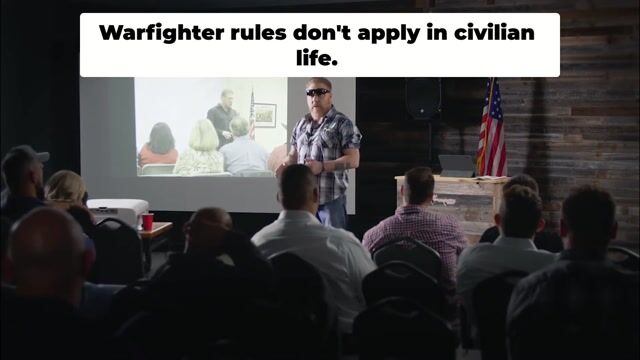
preparedness"You have to learn to play by the rules of that environment, or it's not gonna go well. Might be a little painful." Boone on adaptation — every environment has rules, from basic training to deployment to civilian life. The warfighter who adapts thrives. The one who fights the environment instead of learning its rules gets ground down.
Share & Download
Transcript
As a war fighter, you go to basic training,
whatever phase of that is in your career,
you have to learn to play by the rules of that environment,
or it's not gonna go well.
You're not gonna have a good time.
Might be a little painful.
Then you're gonna ship out, you're gonna go to your unit.
Well, that's not basic training.
Now you gotta learn to play by the rules of that environment,
or things aren't gonna go well.
Might be a little painful.
Then you go to war,
and you gotta learn how to play
by the rules of that environment.
Because if you don't, things aren't gonna go well.
It's probably gonna be a little painful.
Then we come back, and then we go in the civilian world,
and nobody ever says it's no different.
It's just different rules for a different environment,
and it's that simple.
It doesn't matter if we're talking about couples,
it doesn't matter if we're talking about employment,
legislation, it doesn't matter.
We wanted to make a lot of changes back then.
None of us knew how to write a bill proposal.
We've learned.
Warfighters getting elected,
because now we're playing by the rules of our environment.
It's taken this long.
Back then, the term influencer didn't exist,
let alone veteran influencer.
Now you all got celebrity veterans out there.
Yeah, that didn't exist.
10 years.
I thought this would all take place in like three years
with some good marketing.
No, it didn't.
Because we had not identified which of us
was willing to lead at the time.
Because too many of us didn't have the words
or the language, the subject had to come up,
the conversation had to happen for people
to understand what role they wanted to play.
It was outside of our consciousness.
We just knew we respected the Vietnam guys,
but we weren't them.
But we didn't want to say anything
because we respected them.
But we found each other in the digital space.
We started building our own ethos again.
Ethos before ego.
All these things start coming up.
A way of life.
A warfighter is not a job,
it's a race.
We are a certain way.
This war right now, longest war in our history,
still taught by, still fought by volunteers.
Volunteers.
You mean to tell me that's not a certain type of person?
Who grows up and says, I'll go volunteer for that?
It's one type of person.
Not two types, one type.
When we go over there, we do these things.
We serve in the military.
We take these chances.
People talk about camaraderie.
Family.
That's exactly what it was.
If it wasn't for reactive attachment disorder,
we probably wouldn't have an all-volunteer military.
Because we need family.
And we know the place to get it
and we know the sacrifice we're willing to give.
When you go over in that combat situation,
when you're in any type of hardcore stuff
or a prolonged period of time,
there's something called epigenetics.
It's where the body actually changes.
An epigenetic adaptation.
When you become your training, it's not PTSD.
It's an epigenetic adaptation.
We've all adapted because we had to change
to the environment we were in.
And that meant when we were there,
your body's not gonna live,
have to worry about living 60, 80 years.
You had to learn to live 60, 80 seconds.
That's when the endocrine system changed.
That's why our brains changed.
And they all change the same way.
Now, what's it mean when you share
the same DNA with somebody else?
Your family.
What do war fighters call each other?
Family, brother, sister.
Continue the Journey
This video is part of a guided experience. Watch the full story in order.
Start the Preparedness Journey →